


Most answers to “how far in advance should I hire event security” give you one number — usually four to six weeks — and stop there. That number isn’t wrong, but it’s only correct for one kind of event: a small, low-risk gathering with a simple footprint. Once you scale up, the honest answer changes completely, and I’d rather give you the real range than a number that sets you up to plan too late.
Quick Answer
For a small private or corporate event, 4 to 6 weeks of lead time is usually enough to hire and brief a security team. For a mid-size public event, plan on 2 to 4 months. For a large-scale event, festival, or multi-day conference, start 4 to 6 months out. For a major, high-profile, or multi-jurisdictional event, planning should begin 6 to 12 months — sometimes longer — before the date.
Why One Answer Doesn’t Fit Every Event
The federal government doesn’t use a single planning timeline for major events either, and that’s instructive. The Department of Homeland Security rates significant events on a five-tier Special Event Assessment Rating (SEAR) scale, and the Super Bowl is rated SEAR-1 every year — the highest classification below a National Special Security Event. Planning for that single day typically begins at least a year and a half in advance, coordinated across dozens of federal, state, and local agencies.
Your event almost certainly isn’t a SEAR-1. But the underlying principle scales down perfectly: lead time isn’t really about how long it takes to book guards — it’s about how long it takes to actually understand and plan for your event’s specific risk. The guards are the last piece, not the first.
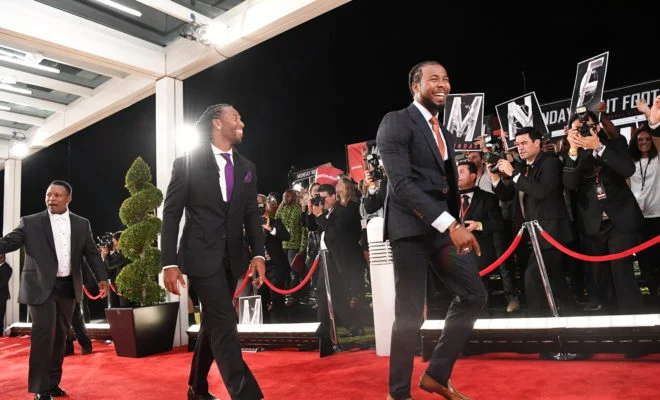
During my time overseeing NFL event security — including the Super Bowl, Pro Bowl, and International Series games — the visible security on game day was the smallest part of the work. The larger share was the months of risk assessment, credentialing, law enforcement coordination, and contingency planning that happened long before anyone showed up at a gate.
Recommended Lead Time by Event Type
| Event Type | Recommended Lead Time | Why |
|---|---|---|
| Small private or corporate event (under 150 guests, single indoor venue) | 4–6 weeks | Simple footprint, minimal coordination needed, staffing is the main task |
| Mid-size public event (500–5,000 attendees, ticketed or open access) | 2–4 months | Requires a real risk assessment, crowd flow planning, and possibly permits |
| Large-scale event, festival, or multi-day conference (5,000+ attendees) | 4–6 months | Needs vendor coordination, law enforcement liaison, equipment procurement (magnetometers, barricades), and staffing at scale |
| Major, high-profile, or multi-jurisdictional event (championship game, celebrity appearance, political event) | 6–12+ months | Requires threat assessment, credentialing systems, interagency coordination, and contingency planning across multiple partners |
If your event sits between two categories — say, a 3,000-person corporate conference with a well-known keynote speaker — plan toward the longer end. Adding a recognizable name, elected official, or controversial topic to any event moves its risk profile up a tier, regardless of headcount.
What Actually Happens During That Lead Time
Booking guards is a phone call. Planning security is a process. Here’s what should be happening in the lead time, roughly in order:
- Initial risk assessment. What’s the venue’s history, the event’s profile, the audience size and composition, and any known or foreseeable threats? This step alone can take two to four weeks for anything beyond a small private event.
- Security plan development. Staffing levels, screening approach (see our clear bag policy breakdown for how that decision fits in), entry/exit flow, and emergency action planning get drafted and reviewed.
- Vendor and law enforcement coordination. For anything beyond a small private event, this means contacting local police for awareness or support, confirming permits, and lining up any specialized resources (K-9, medical, traffic control).
- Credentialing and access control setup. Who gets in which areas, how staff and vendors are identified, and how that’s enforced at the gate.
- Equipment and screening logistics. Magnetometers, barricades, signage, and radios don’t materialize overnight — larger events often need to reserve this equipment weeks or months ahead of peak season.
- Final walkthrough and briefing. In the final week, the plan gets tested against the actual physical space, and every member of the security team is briefed on their specific role — not just handed a schedule.
Skip straight to step 6 without the first five, and you don’t have an event security plan — you have people in polo shirts standing at doors.
What Happens If You Wait Too Long
I’ve walked into more than one situation where an organizer called three weeks out from a mid-size public event wanting a full security plan. It’s not that it’s impossible — it’s that waiting removes options, not just time:
- Availability shrinks. Experienced security teams and specialized equipment (magnetometers, barricades) book up fastest during peak event seasons — spring festival season and Q4 corporate events especially.
- Risk assessment gets rushed or skipped. A plan built in three days is a staffing plan, not a security plan. The parts that actually prevent incidents — perimeter design, credentialing, contingency planning — are the first things to get cut under time pressure.
- Costs go up. Rush staffing, expedited equipment rental, and overtime are all more expensive than the same resources booked with normal lead time.
- Law enforcement coordination gets harder. Local agencies plan their own resourcing in advance too. A request with real lead time gets a real conversation; a request with three weeks’ notice gets whatever’s left over.
None of this means a late-notice event can’t be secured reasonably well. It means the plan will be built around what’s available, not around what the event actually needs — and that gap is exactly where avoidable incidents happen.
A Practical Planning Timeline You Can Copy
For a mid-to-large event, here’s a rough backward-planning framework:
- 4–6 months out: Initial risk assessment and security plan outline
- 3 months out: Security vendor selected, law enforcement contacted, permits confirmed
- 6–8 weeks out: Staffing levels finalized, equipment reserved, credentialing system designed
- 2–3 weeks out: Final walkthrough scheduled, contingency plans reviewed
- 1 week out: All staff briefed, final headcount and role assignments locked
- Day of: Execution — which should feel almost uneventful if the previous steps were done right
If you’re already inside one of these windows without the corresponding step done, that’s not a reason to panic — it’s a reason to bring in someone who can compress the process without skipping the parts that matter.
Frequently Asked Questions
1. How far in advance should I hire security for a small event?
For a small private or corporate event under about 150 guests in a single indoor venue, 4 to 6 weeks of lead time is typically enough to assess the venue, confirm staffing, and brief the team properly.
2. How far in advance should I hire security for a large public event?
For events with 5,000 or more attendees, festivals, or multi-day conferences, plan for 4 to 6 months of lead time to allow for a full risk assessment, law enforcement coordination, and equipment procurement.
3. Does adding a well-known speaker or celebrity change the timeline?
Yes. A recognizable name, elected official, or controversial topic raises an event’s risk profile regardless of attendee count, and typically moves the planning timeline into the next longer bracket.
4. Can event security still be arranged with only a few weeks’ notice?
It can, but with tradeoffs — reduced staffing availability, higher rush costs, and a compressed or skipped risk assessment. It’s workable for lower-risk events but not ideal for anything mid-size or larger.
5. What’s the very first step in planning event security, before hiring anyone?
A risk assessment — understanding the venue, the audience, the event’s profile, and any foreseeable threats — should come before staffing decisions, not after.
6. How is planning for a major event like the Super Bowl different from a corporate event?
Major events like the Super Bowl are federally rated on the Special Event Assessment Rating scale and involve dozens of coordinating agencies over roughly 18 months; the same core principles — risk assessment first, staffing last — simply scale down to a much shorter, simpler process for most private and corporate events.
7. Who should be involved in event security planning besides the security company?
Depending on the event’s size, this can include venue management, local law enforcement, permitting authorities, medical/EMS coordination, and in some cases the municipality’s special events office.
8. Does the venue or the event organizer decide the security plan?
It’s typically a joint responsibility — the venue often has baseline requirements (especially for stadiums and arenas), but the organizer is usually responsible for event-specific staffing, credentialing, and risk assessment.
9. How much does event security typically cost, and does booking early save money?
Costs vary widely by event size and risk level, but booking early consistently costs less than rush staffing, expedited equipment rental, or last-minute overtime — the lead time itself is one of the more controllable cost factors in event security.
10. What’s the biggest mistake organizers make with event security timing?
Treating security as a staffing line item to fill in a few weeks before the event, rather than a planning process that should start alongside — not after — the rest of the event’s logistics.
Planning an Event in Southern California
Lead time also depends on your local market’s calendar. San Diego’s convention and event season — from Comic-Con week to major conferences — books security resources and venues well in advance; organizations planning something significant there should start with our overview of event security consulting in San Diego.
Los Angeles carries its own timing pressure — awards season, major concerts, and large-scale productions compete for the same pool of experienced security vendors and equipment, which is exactly why organizations there benefit from starting with a security risk assessment in Los Angeles well before the event date is locked.
Orange County’s mix of corporate conferences, concerts, and community events at venues like Angel Stadium and the Honda Center means popular dates get claimed early — both for the venue and for the security resources to support it. Our piece on risk management consulting in Orange County walks through how prepared organizations in that market plan ahead of the rush.
The Bottom Line
The question isn’t really “how far in advance do I need to hire security” — it’s “how far in advance do I need to start planning security,” and hiring the team is one of the last steps in that process, not the first. Start with a risk assessment, build the plan around what that assessment actually finds, and the staffing conversation becomes much easier.
If you have an event on the calendar and haven’t started that process yet, it’s worth a conversation now rather than in six weeks. Contact Jeffrey Miller Consulting to talk through your timeline, explore our Event Security Consulting services, or start with a Risk & Vulnerability Assessment if you’re not yet sure what your event actually needs.